‘Muntu: An Outline of Neo-African culture by Janheinz Jahn Publication, 1961
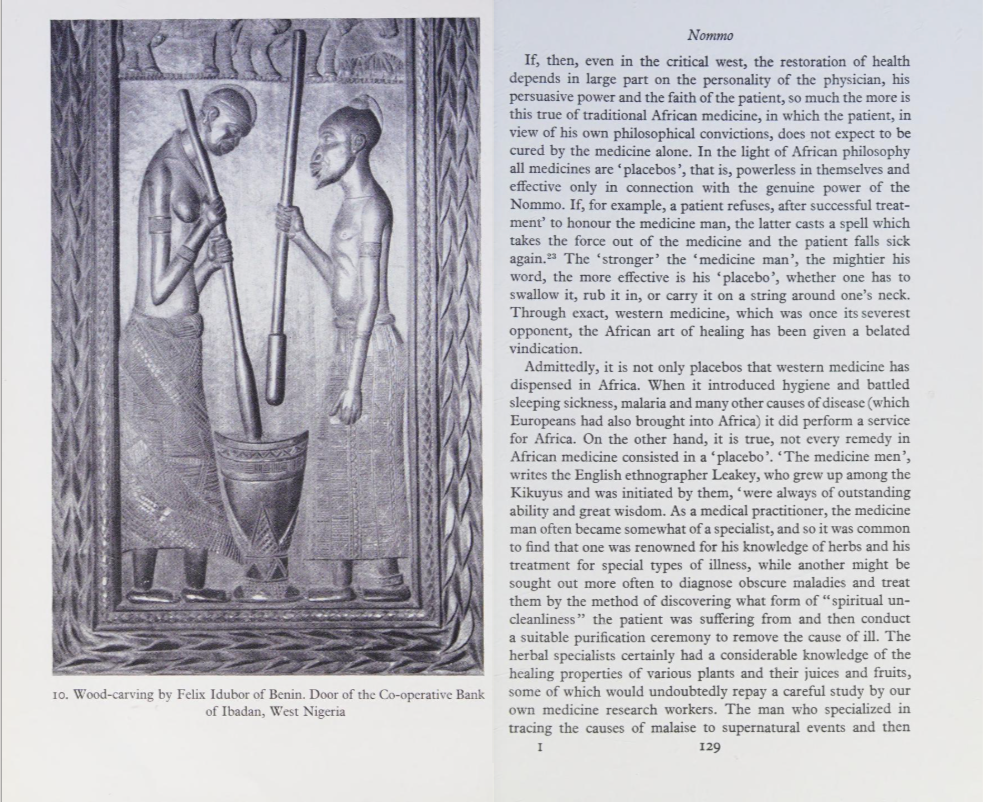
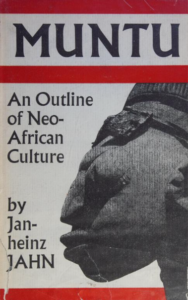
Independent artists are still rare in Africa. Only a few have not surrendered to European influences. The majority believe that with European materials and techniques they must also accept European forms and methods. European art – with the help of African art – has scarcely set itself free from naturalism, while African artists, as apprentices to Europeanism, are struggling to copy landscapes, fix situations, model realistic portraits. Some found a relation to their native tradition – the carvers Idah and Felix Idubor in Benin (Plate 10) – but only a few found their way back to the artistic attitude of the African. In Ghana, Ampofo and in Nigeria, Ben Enwonwu have found their way, after long detours, to some neo-African expression. Necessary as patrons are to African artists, these patrons are also a danger: Ben Enwonwu was commissioned to model the Queen of England, who sat for him for many hours. That Enwonwu achieved the desired naturalistic copy bears witness to his skill as a craftsman, but not to his art, which is revealed in his magical neo-African figures and paintings (Plate 11)…